Selecting the Right Door Reader for Your Access Control System
How to Select the Best Door Readers
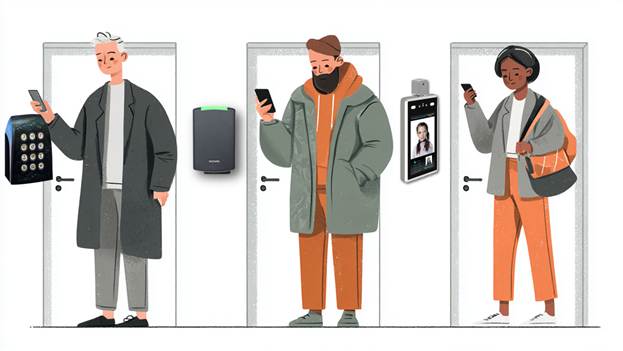
The door reader is a critical part of the access control system. You should consider your objectives for each entry point. Things to consider include the security level you need at the door, the type of credential you would like, the management and installation cost, and ease of use.
This article provides guidance for selecting the best door readers for your access control system.
A maid decided it was time to demand a raise, so she went directly to the Lady of the house’s private study
Maid: “I’d like a raise.” Mrs. Smith: “Why do you think you deserve a raise? Maid: “Three reasons. First, I can cook better than you.” Mrs. Smith: “Who told you that?”
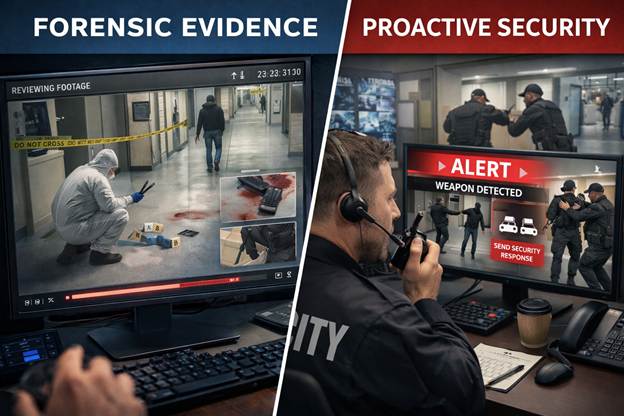
The difference between a record-only IP camera system and a real-time alerting (AI-enhanced) system is essentially the difference between forensic security and proactive security. Each has benefits, but they serve very different operational objectives.
This article compares recorded security video to a system that uses an alert-type AI-enhanced Security.
How Door Access Control Systems Work to Increase Security
Door Access Control System
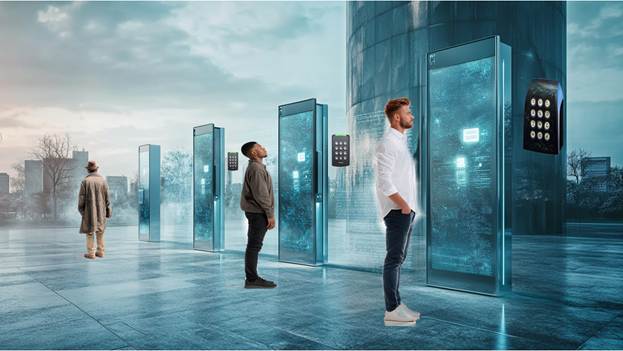
It is important to understand how access control works and how it can increase your safety and security. A door access control system is an important part of an organization’s overall security. It ensures that only authorized individuals can enter specific areas of a building. The system performs four essential functions:
Identifies who is allowed to enter
Determines which doors they can access
Defines when access is permitted
Maintains records of who enters and exits
This article describes how access control systems work.
A family of mice was out walking and was suddenly surprised by a large cat. Father Mouse stood his ground, drew himself up to his full height, and shouted “BOW-WOW-WOW!!!” at the cat. The cat, alarmed, ran off.
The small mice were very impressed. “That was fantastic, Dad! How did you do that?”
“That, son, “explains Father Mouse, “demonstrates the value of learning a second language.”
Increasing Safety with AI-Enhanced Surveillance and Human Command & Control Centers
AI-enhanced Surveillance Systems
Traditional surveillance camera systems were designed primarily to record events. Security personnel would review the video after an incident occurred to determine what happened. While this approach provided valuable evidence, it offered little help in preventing incidents in real time.
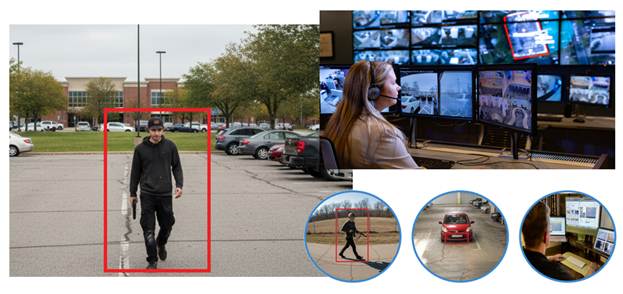
Today, AI-enhanced surveillance cameras are dramatically changing this model. By combining advanced video analytics with intelligent software and human monitoring, modern surveillance systems can detect threats as they develop, verify the situation, and immediately alert the appropriate personnel. This transformation turns video surveillance from a passive recording tool into an active security system.
This article reviews the latest advances in AI-enhanced IP Camera Systems and examines how human monitoring enhances them.
The PAN, Tilt, Zoom (PTZ) Camera Provides Versatile and Effective Surveillance
The PTZ Camera
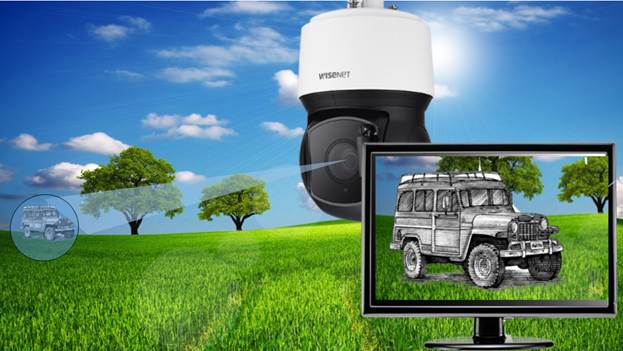
Do you want to detect objects many miles away? A PTZ (Pan-Tilt-Zoom) camera is ideal for the job. It is a flexible, powerful camera that enhances your IP Camera System.
Define Your Objectives, Then Select the IP Camera Specifications Required
Selecting the Right Surveillance Camera
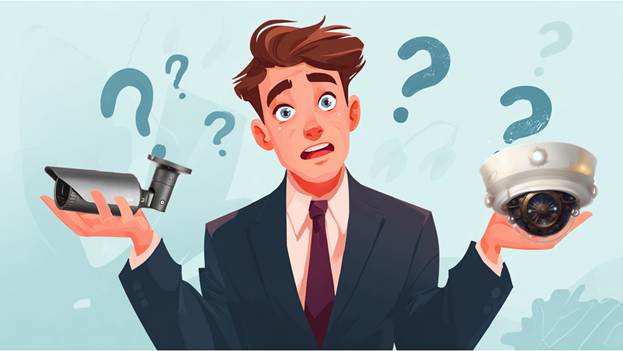
Your Objectives: Define the IP Camera specifications you need. Are you planning to purchase surveillance cameras for your business? Your objectives will determine the best camera for each location.
This article explains how specific objectives are fulfilled by specific specifications.
What Small Businesses Should Know About Self-Installing an IP Camera System
IP Camera System Installation Choices
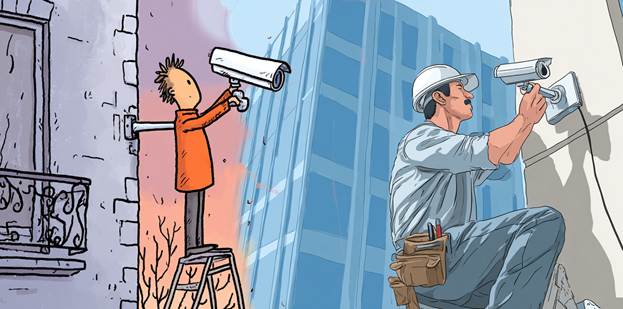
When a small shop or business considers installing an IP Camera surveillance system, one of the first questions is whether to choose a DIY (do-it-yourself) solution or hire a professional system integrator. At first glance, DIY systems appear simpler and less expensive, while professional IP camera systems seem complex and costly. In reality, the decision depends on several important factors, including security objectives, risk tolerance, expertise, and long-term expectations.
This article describes the pros and cons of self-installation versus professional installation.